Architecture Decisions
Architecture decision records live under docs/decisions in the repository. This page summarizes the current reader-facing decisions.
ADR-002: BPMN-centric Agentwerke runtime by default
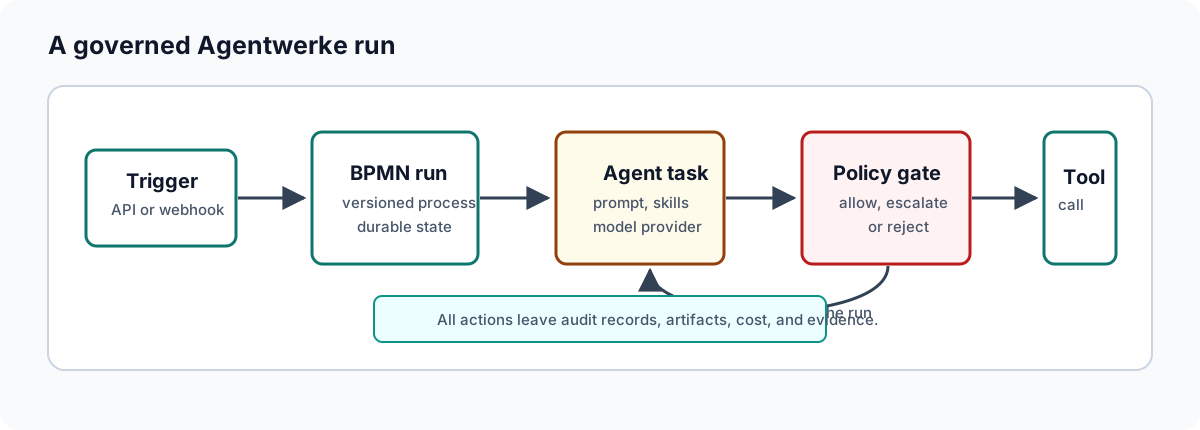
Agentwerke's default workflow runtime is the in-process, Postgres-backed Agentwerke runtime. It avoids requiring Camunda for the open-source path and keeps the default deployment simpler.
Operational impact:
WorkflowRuntime:Mode=Agentwerkeis the default.- Camunda options should not be read unless
WorkflowRuntime:Mode=Camunda. - Health endpoints expose the active runtime mode.
ADR-001: Camunda 8 for production BPMN runtime
This decision is superseded by ADR-002 for the default runtime. Camunda remains an opt-in enterprise adapter.
Operational impact:
- Existing Camunda documentation should be read as adapter-specific.
- New quickstart and open-core docs should assume the Agentwerke runtime unless explicitly stated otherwise.
ADR-003: OpenSandbox control plane with Kata runtime
OpenSandbox/Kata is the preferred path for stronger sandbox isolation where plain Docker boundaries are not enough.
Operational impact:
- Docker is useful for local development and simple installs.
- Production environments with stricter egress or isolation requirements should evaluate OpenSandbox or Kubernetes-backed sandboxing.
- Workflow authors should still express intent through
sandboxProfile.
When to add an ADR
Add or update an ADR when a change:
- changes a public runtime mode
- changes a security boundary
- changes the deployment model
- changes data residency expectations
- deprecates or supersedes an integration/runtime
- introduces a lasting architectural tradeoff